
The “$0 startup” was a promo price. Here is the real invoice.
People love a “$0 startup” story. I told you one yesterday: a website for $2, neither dollar mine.
It was true — for the first year, on a promo. But a promo is a promo, and an engineer who won’t read the fine print is an engineer who’ll watch the bridge fall. So here is the full ledger: every dollar, every renewal, and the one cost no invoice ever shows.
The machines, line by line
One VPS: $14.60 a month — and it belongs to the EA. That server exists for one reason: the trading EA’s forward test, running around the clock. It is the EA’s box, on the EA’s bill, and I’ve been paying it since June 2026. Everything else just hitchhikes: the whole n8n automation stack — the machines behind this blog’s posts and both affiliate sites — rides on the same server for $0 extra. No second server, and the websites don’t carry the EA’s cost.
Hosting for this blog: $3.85 a month. The receipt says “Save 45%” — so this number is a promo too, and the renewal will be bigger. The account runs to August 2027. I’ll print the renewal price when I see it, the same way I print everything else.
Domains: $1.88 plus $2 plus $1 a year. This blog’s domain costs $1.88 a year. The $2 website from Part 5 really was $2 for year one — $1 hosting, $1 Domain Guard, the domain free — but the renewal reads differently: $14 a month for hosting, $20 a year for the domain, and Domain Guard at either $15 or $16 a year — IONOS quoted me both in two different emails, so I print both; the invoice itself bills $15, so $15 is the number I plan around. A second affiliate domain cost $1 for its first year.
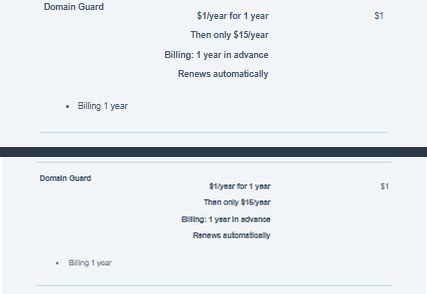
“Same product, two official IONOS emails: $15 in one, $16 in the other. The invoice bills $15“
Everything else: $0. The automation runs on free tiers. No paid APIs, no subscriptions, no “pro” upgrades hiding anywhere.
The honest total: about $18.45 a month — plus a few dollars a year in domains. But read the split honestly: $14.60 of that is the EA’s server, which everything else rides for free. Take the EA away, and the websites’ own bill is $3.85 a month plus the domains. That is the price of keeping the machines on.
The expensive part
Now the line no receipt shows: the hours. My workday runs from 1 or 2 in the morning to 5 in the afternoon — roughly double the working day I had back at the company. Nobody invoices that. Nobody refunds it either.
And the free part? The patience of the machine that answers my hundredth stupid question exactly the way it answered the first. That patience is genuinely free — and it is the only free thing in this whole story.
The kill criterion
One more line in the ledger, and it is a rule, not a cost: each site gets one year to earn its keep. The $2 website cost me nothing out of pocket, but it still has to justify its existence — if it can’t cover its own costs in a year, I let it go. It only ever cost me effort.
That is the whole invoice. No “$0 startup” myth, no hidden upsell, no “but wait.” The cheapest part was the money. The expensive part was the hours. And the whole thing was worth it — because the hours were mine to spend.
Your turn — I read every comment
1. Have you ever added up what a “free” project actually cost you? What surprised you?
2. Promo prices: a clever deal, or a trap with better marketing?
3. Would you keep a project alive on effort alone — or does everything need a kill criterion?
The best questions become material for the next parts.
Next: From Zero to an EA on a VPS — the hardest build of all.
Leave a Reply